

- Middle East
Turkish Legal Newsletter: Basic Series No. 2
Comparison of Joint Stock Companies (AŞ/JSC) and Limited Liability Companies (LTD/LLC) and the Latest Capital Regulations
In the first issue of the newsletter, we provided an overview of Turkey’s investment environment and its strategic position for foreign investors. When considering an actual entry into the Turkish market, one of the most critical decisions is the selection of an appropriate business structure, as this choice has a significant impact on the long-term success and risk profile of the business. In Turkey, foreign investors typically establish one of two types of capital companies: Joint Stock Companies (Anonim Şirket – AŞ/JSC) or Limited Liability Companies (Limited Şirket – LTD/LLC). Although both corporate forms are based on the principle that shareholders’ liability is, in principle, limited to their capital contribution, there are material differences in their regulatory frameworks, governance structures, and operational flexibility...To read the full article, please see the PDF file
-
Middle East Newsletter
Download PDF [235 KB]
Authors

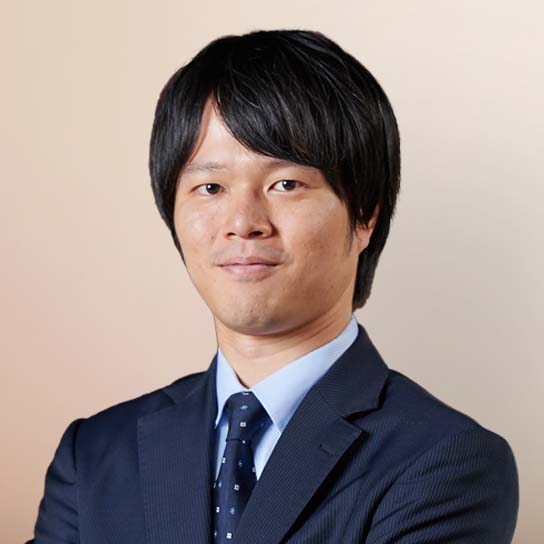
In addition to seven years' experience in Vietnam, Taro also has experience in working as in-house counsel for a major trading company. He has strong expertise in cross-border M&A/joint ventures, real estate development, labor, compliance, crisis management deals, and international transactions. In recent years, the scope of his work has expanded to include Turkey and other Middle Eastern countries. He is also a member of the Agrifood Practice Team.

Suguru KURODA
- Associate
- Tokyo

Momoe IKEMOTO
- Associate
- Tokyo
Related Knowledge
-

-
Trends and Practices in Cross-Border Startup Investment
Tokyo
Nishimura & Asahi Seminars
- Bonso MORIMOTO
- David Hava
-

-
Turkish Legal Newsletter: Basic Series No. 1
Middle East
- Masao MORISHITA
- Taro HIROSAWA
- Suguru KURODA and others
-

-
In-depth: Real Estate Law - Edition 15: Japan Chapter
Articles
- Norio MAEDA
- Akihiro SHIBA
- Keisuke YONAMINE and others
-

-
N&A Legal Forum
Japan-EU Investments: Cross-border M&A and EU Competition Law
Tokyo
Nishimura & Asahi Seminars
-

-
European Commission Adopts Final Guidelines on the EU Foreign Subsidies Regulation
Others
- Kristina WINKELMANN
- Chris BUHURI
- Roman Landin REHMKE and others
-

-
Conference on Investment Protection and Domestic Courts (Panelist: Tokyo partner Shimpei Ishido and counsel Motohiro Maeda)
Austria
External Seminars
As an attorney belonging to a Japanese law firm, Masao is the only long-term resident attorney in the Middle East. From Dubai, a hub in the MENA region, he covers a broad area including the Gulf countries, Iran, Israel, Turkey, Egypt, etc.
Masao frequently deals with legal issues inherent to the Middle East, such as commercial agency laws, foreign investment restrictions, and economic sanctions, and has been involved in numerous Middle-East-related seminars and articles.
In the Middle East, where divergences between laws and practices are a frequent issue, he is able to provide practical advice that goes beyond a mere understanding of the contents of applicable laws, drawing on his diverse range of experience and personal connections in the region.
Masao has close relationships with major law firms in each country and coordinates with such firms in an appropriate and timely manner, including controlling attorneys’ fees.
He has also been involved in infrastructure projects worldwide, including at a Japanese investment and trading company and a UK law firm to which he was seconded.